Loading…
Sign up for our Newsletter
We will be sending out a newsletter 3 to 4 times per year with information about new publications, any upcoming conference appearances, new developments on our website, and more.
Due to the recent termination of almost all NEH grants, METS needs your support today!
Please donate here to help us continue our mission to make medieval texts available to all. Your donation will directly support our staff.
We will be sending out a newsletter 3 to 4 times per year with information about new publications, any upcoming conference appearances, new developments on our website, and more.
A sample of upcoming publications
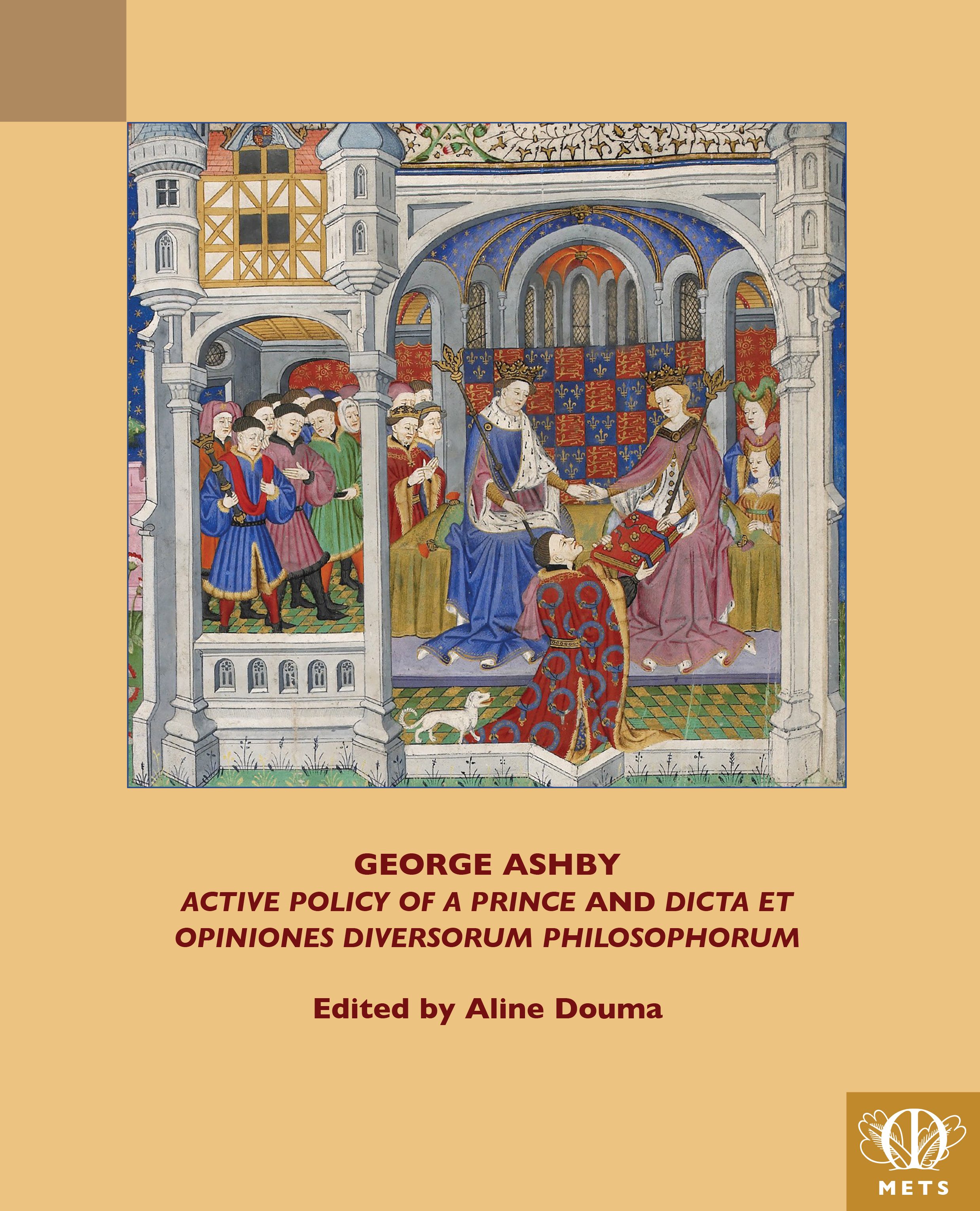
George Ashby’s Active Policy of a Prince and its addendum Dicta et opiniones diversorum philosophorum, a mirror for princes written ca. 1461–1462 for the Lancastrian prince Edward, is a unique witness to the political discourse of the Wars of the Roses. As a clerk of the Signet Office, Ashby had intimate knowledge of both the inner workings of politics at the Lancastrian court as well as its key players. The Active Policy of a Prince is a largely original work of political advice written in Middle English, while the Dicta et opiniones diversorum philosophorum is a macaronic text, combining prose passages taken mostly from the Latin wisdom text Liber philosophorum moralium antiquorum, followed by Ashby’s verse translations in Middle English. This book presents a full edition of The Active Policy and Dicta with extensive glosses, notes and translations of the Latin passages.